“In a world of shadows, she was the light they couldn’t possess.”
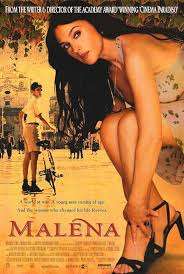
Giuseppe Tornatore’s 𝑴𝒂𝒍𝒆̀𝒏𝒂 is a film that lingers—like perfume in an empty room, like the echo of a lover’s whisper. Starring Monica Bellucci in her most iconic role, this Italian masterpiece blends tragedy, eroticism, and the cruel whims of human nature into a visually intoxicating fable.
Is it a coming-of-age story? A war drama? A scathing satire of societal hypocrisy? 𝑴𝒂𝒍𝒆̀𝒏𝒂 is all of these and more.
Plot: The Woman Who Stole a Town’s Soul
Set in 1940s Sicily during World War II, the film follows Renato Amoroso (Giuseppe Sulfaro), a 12-year-old boy on the cusp of adolescence, as he becomes obsessed with Malèna Scordia (Monica Bellucci), a stunningly beautiful woman whose husband is away at war.
As bombs fall and fascist rule tightens its grip, Malèna becomes the object of the town’s collective desire—and its collective scorn. The men lust after her; the women despise her. Renato watches, fantasizes, and ultimately witnesses her tragic unraveling.
Themes: Beauty as a Curse
1. The Male Gaze & Societal Hypocrisy
Malèna never speaks much—because she doesn’t need to. Her mere presence ignites lust, jealousy, and rage. Tornatore exposes the town’s moral rot:
-
The men leer, grope, and fantasize about her.
-
The women accuse her of seducing their husbands, cutting her off from society.
-
Renato worships her, but his “love” is just another form of objectification.
The film asks: Is beauty a gift or a prison?
2. War & Human Savagery
While soldiers fight abroad, the real war is in the town’s streets. When Malèna’s father dies and her husband is presumed dead, she’s left defenseless—and the villagers pounce. A harrowing rape scene (one of cinema’s most brutal) shows how quickly admiration turns to violence.
3. The Loss of Innocence
Renato’s journey mirrors Italy’s own wartime disillusionment. His boyish fantasies clash with the ugly reality of Malèna’s suffering. By the end, he’s no longer a dreamer—just another witness to cruelty.
Performances: Bellucci’s Silent Devastation
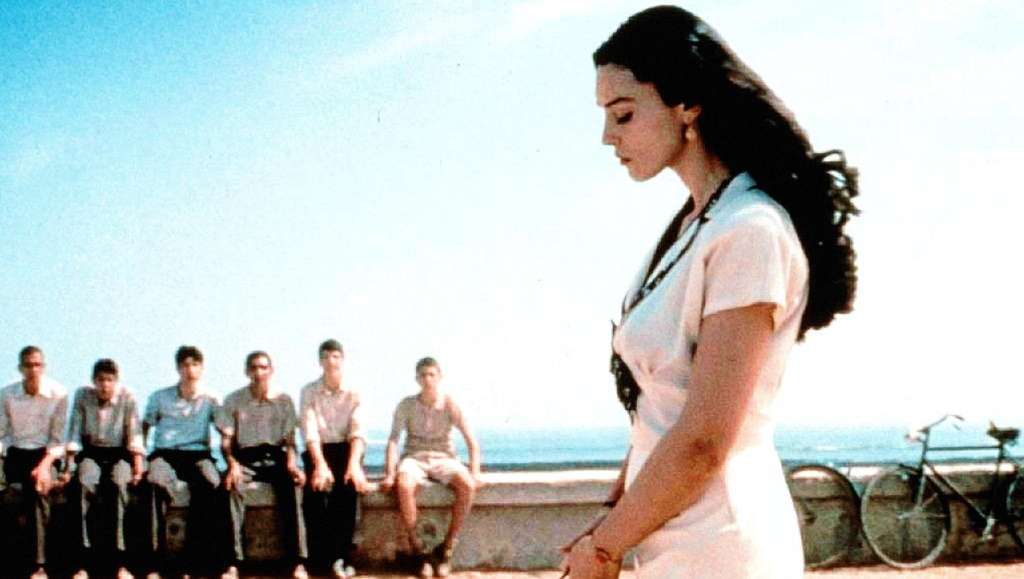
Monica Bellucci – A Star Is Born
Bellucci doesn’t just play Malèna—she is Malèna. With minimal dialogue, she conveys:
-
Pride (walking through the piazza, head held high).
-
Vulnerability (her breakdown after her father’s death).
-
Defiance (the chilling moment she cuts her hair and becomes what they always accused her of being).
This role cemented her as an international icon.
Giuseppe Sulfaro – The Perfect Observer
Sulfaro’s Renato is both relatable and unsettling. His obsession feels authentic—a mix of hormonal infatuation and genuine heartbreak as he watches Malèna’s downfall.
Cinematography & Score: A Dreamlike Tragedy
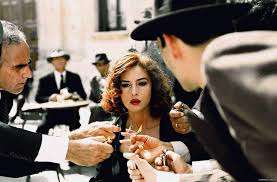
Lajos Koltai’s Gorgeous Visuals
Every frame is painterly:
-
Sun-drenched Sicilian streets (contrasted with the dark shadows of gossip).
-
Surreal fantasy sequences (Renato imagining himself as a hero saving Malèna).
-
The haunting final shot (Malèna walking away, forever marked by the town’s cruelty).
Ennio Morricone’s Unforgettable Music
The score swings between whimsical (Renato’s fantasies) and mournful (Malèna’s suffering). The main theme, “Malèna,” is a melancholic waltz that lingers long after the credits roll.
Controversies & Censorship
-
The NC-17 Rating: The film’s nudity and sexual themes sparked debate. Some cuts softened Renato’s fantasies, diluting the film’s rawness.
-
Feminist Criticism: Does the film exploit Malèna’s suffering, or expose the exploitation? Bellucci defended it as a “portrait of how society destroys beauty.”
Legacy: Why 𝑴𝒂𝒍𝒆̀𝒏𝒂 Still Haunts Us
More than 20 years later, the film’s power hasn’t faded. It’s a cautionary tale about:
-
How societies punish women for male desire.
-
How war brings out the worst in people.
-
How innocence is lost not in battle, but in everyday cruelty.
It’s also, undeniably, one of the most beautiful films ever made—a paradox that makes it all the more devastating.
Final Verdict: A Masterpiece of Pain & Poetry
𝑴𝒂𝒍𝒆̀𝒏𝒂 isn’t just a film—it’s an experience. It seduces you with beauty, then breaks your heart with truth.
Rating: 9.5/10 – Flawed, fearless, and unforgettable.
Lasting Thought:
“They hated her because she was everything they couldn’t have—and everything they feared becoming.”